Hi Teach! Hi mum! Are you looking for a simple but effective way to help your kids understand and express their emotions? Being able to do this is one of the most important parts of early learning—and that’s where a feelings chart can make all the difference. This feelings chart freebie is versatile. You can use it at home or in the classroom! This simple visual tool gives children the words and images they need to recognise, label, and talk about how they feel. Let’s talk about whey they are important.
Why feelings charts are so important
Using the right tools
😀 So drawing on my background in the classroom, I have found that when children are supported with the right tools to communicate their feelings, it reduces the stress they feel when they find communication difficult.
A feelings chart offers just that—a supportive, visual tool to help children begin naming and expressing emotions they may not yet have the words for. This is such an important part of social and emotional learning and plays a key role in promoting overall wellbeing.
Neurodiverse learners
😀 These charts are especially helpful for neurodiverse learners. In my classroom, I’ve noticed that children often gravitate toward the faces on feelings charts. This tells me how valuable the visuals really are.
The expressive faces give them something to connect with and reflect on, when they may not be ready or able to describe how they’re feeling.
Feelings charts support EAL learners
😀 They’re also a fantastic resource for EAL (English as an Additional Language) learners. As children begin to learn a new language, having clear facial expressions linked with emotion words helps build understanding.
This not only supports language development but also empowers children to share their emotions confidently in a new environment.
Supporting Communication and Self regulation
😀 Additionally, feelings charts provide a visual way for students to understand and label different emotions. These charts will help students with both communication and self-regulation.
Children begin to identify what emotions look and feel like, giving them the tools they need to manage their own behaviour and reactions effectively. When children can name what they’re feeling, they can begin to work through those feelings rather than act out.
Think about how valable is it to, defuse a situation, rather than have to deal with the fall out!
Great for conflict resolution
😀 They also help in conflict resolution. When students are upset or frustrated, being able to point to a visual that represents their emotion helps them feel heard.
If you love this, you may also like my Zones of Regulation Chart, which uses expressive faces to help children identify feelings within different zones—great for supporting regulation in a more structured way.
How to use the feelings chart at school.
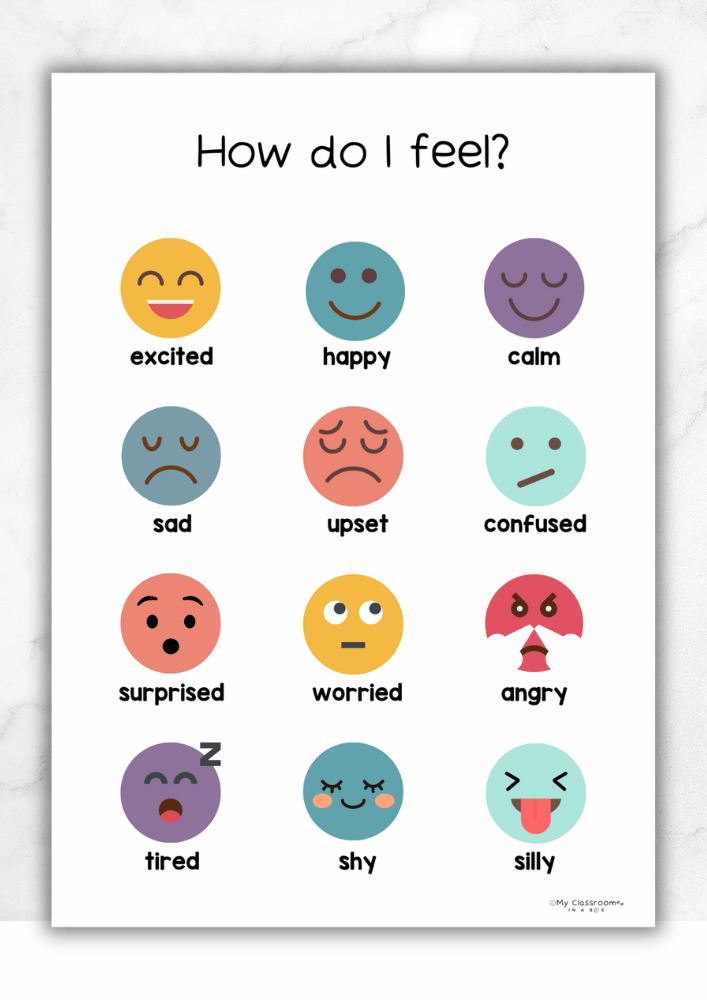
✔️ I have created this feelings chart with faces to be displayed somewhere central—by the classroom door , in a calm corner or near the carpet area.
✔️ It can be used as a check-in point each morning where children indicate how they’re feeling by pointing or placing a name tag. Blow up to A3 or larger if using name tags.
✔️ Don’t just have it as a display try to incorporate the chart in PSHE and citizenship lessons e.g when you are having a class discussions about friendship, behaviour or even during stories you’ll read together.
✔️ You can also use it as a prompt when supporting children through emotional moments, helping them identify how they feel and what they might need next.

How to use the feelings chart at home
✔️ Place the chart in a quiet, accessible spot at home—on the fridge, in a child’s bedroom or near your calm-down space.
✔️ Encourage your child to check in at different times of day or use it as a conversation starter before school or at bedtime.
✔️ Try asking, “Can you show me how you’re feeling right now?” or “Which face shows how your day went?” It’s a gentle, non-pressured way to connect and build your child’s emotional awareness in everyday moments.
What’s included in the feelings chart FREEBIE
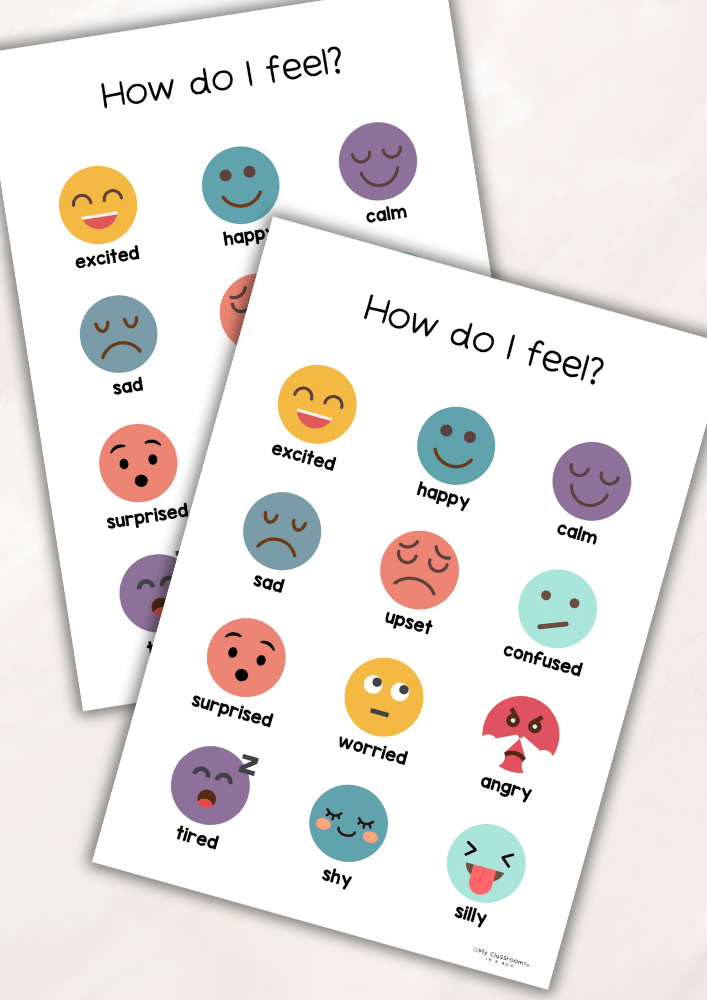
The feelings chart simple printable includes clearly labelled illustrations for emotions such as:
✔ Excited
✔ Happy
✔ Calm
✔ Sad
✔ Upset
✔ Confused
✔ Surprised
✔ Worried
✔ Angry
✔ Tired
✔ Shy
✔ Silly
It’s perfect for both home and classroom use and offers a warm, inclusive way to support children’s emotional development.
Like free stuff? Yes Please👇
FREE PASTEL CALENDAR KIT
Packed with soo many resources – monthly calendar, pocket calendar, special events cards AND more!

Supplies Needed to Print:
Finally, here are a few ideas for the supplies you will need for printing and displaying this resource.
✔ Paper or cardstock (Card or cardstock is better if you don’t laminate.)
✔ Printer (This printer is almost the same as the one I have at home)
✔ Laminating sheets (Optional—helps them last longer!)
Ready to Get Your Feelings Chart Poster?
Download your FREE printable PDF here.👇
FEELINGS CHART POSTERLife’s Better Together! Sign Up & Stay In the Loop.
Thank you!
You have successfully joined our subscriber list.
Keep Supporting Social and Emotional Learning. Check these out!
If you found this Feelings Chart helpful, here are three more printables you’ll love:
🧠 Zones of Regulation Chart – A perfect companion to your feelings chart, this freebie helps kids learn to manage emotions and understand their regulation zone.
🎂 Classroom Birthday Display Bundle – Make every child feel seen and celebrated while building classroom community.
🍽️ Restaurant Role Play Bundle – Spark imaginative play and social interaction with the creative and fun printables in this kit.