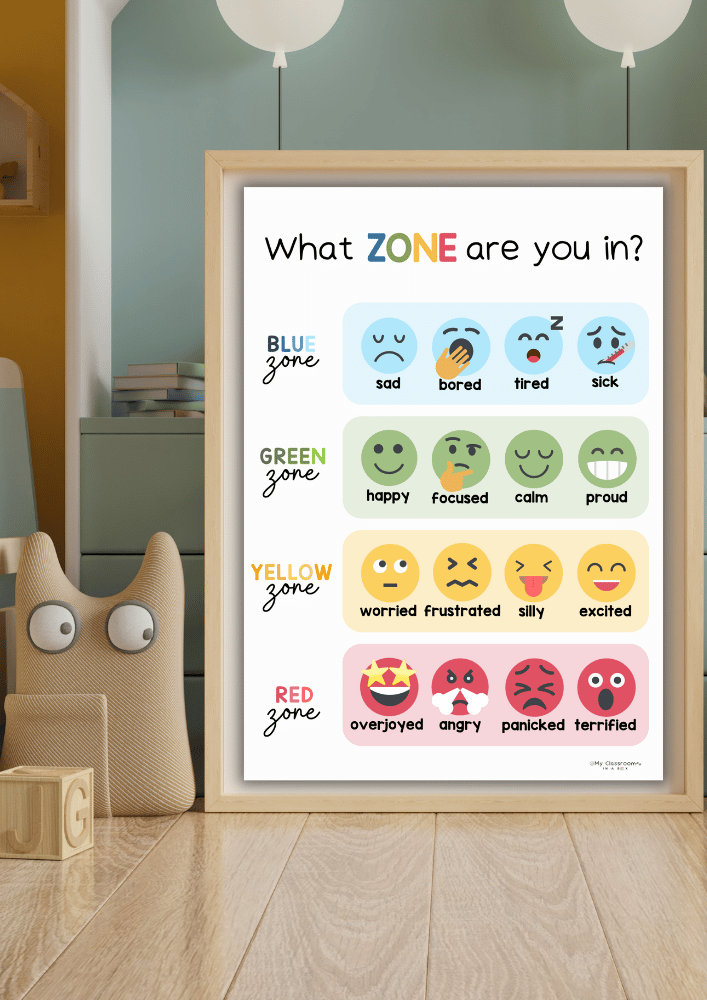
In a recent blog, I shared all about the importance of helping children understand their feelings. Whilst writing this blog, I thought about the zones of regulation chart that I currently use I my classroom. My students love using the chart and use it to check-in thought-out the day. I’ve found that helping children recognise and manage their emotions is key to their success in lots of different ways e.g socially, emotionally and even academically. That’s where teaching about the Zones of Regulation come in. It’s a simple, colour-coded system that teaches children how to identify feelings, develop self-regulation skills and choose appropriate strategies to help themselves feel better.
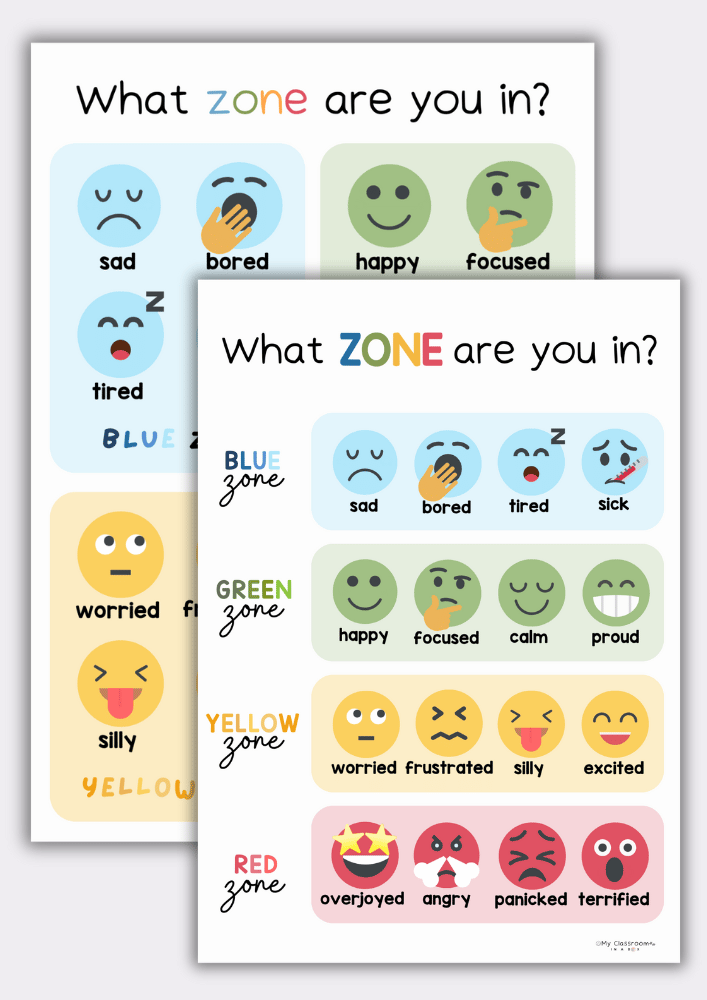
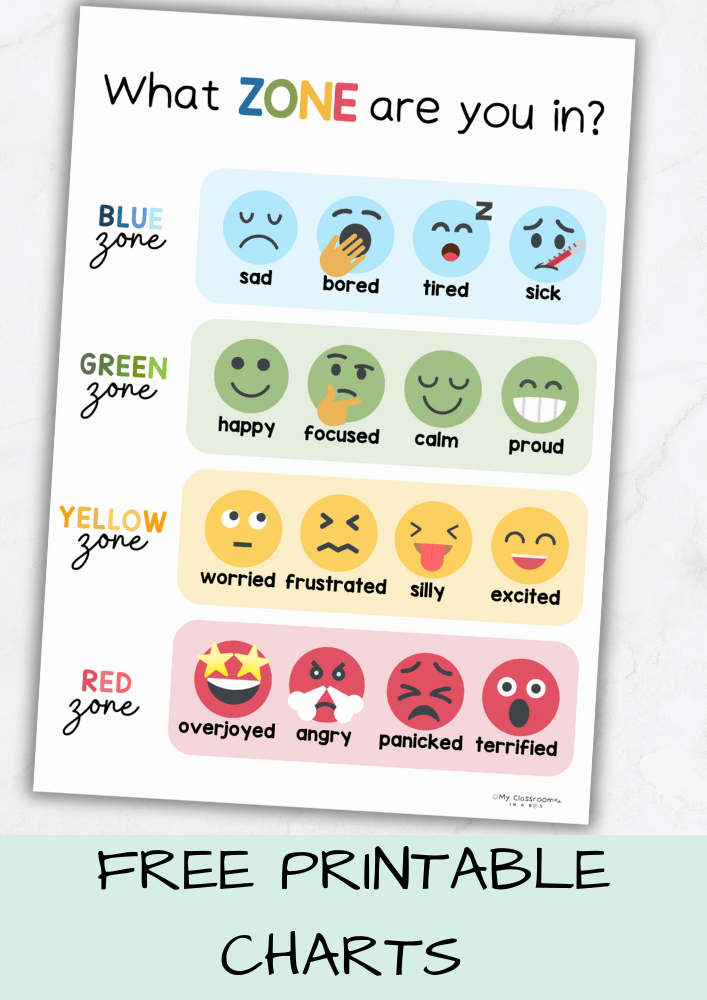
To support this learning, I’ve created a Zones of Regulation chart as a printable freebie. It’s perfect for classroom displays, home use or calm-down corners. You’ll find the link later in this post!
What Are the Zones of Regulation?
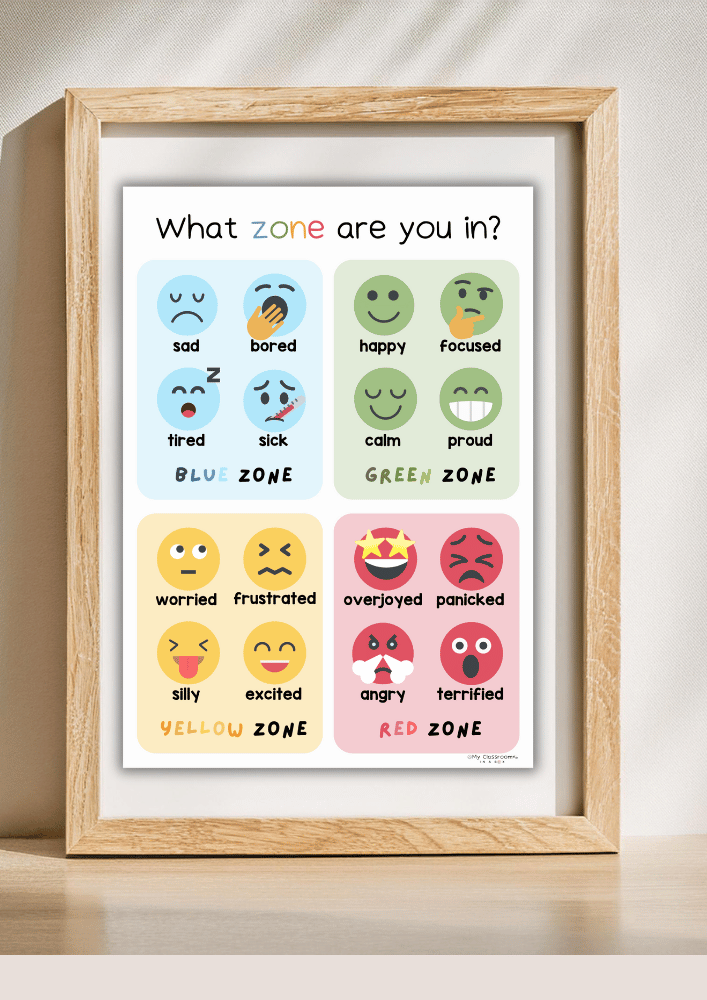
The Zones of Regulation is a framework to describe emotions and energy levels. It breaks emotions and states of alertness into four coloured zones:
- Blue Zone – Low energy emotions like tired, bored, sad or sick.
- Green Zone – Calm, focused and ready to learn. This is the “just right” zone.
- Yellow Zone – Starting to lose control—frustrated, silly, worried or excited.
- Red Zone – Intense emotions like feeling elated (overjoyed), anger, rage, terrified or out-of-control behaviour.
These zones help children check in with how they’re feeling and understand that all feelings are okay—it’s what we do with them that matters. Remember to tell children know there is no ‘bad’ zone but they must be equipped with strategies to help them recognise how they are feeling and also importantly how others are feeling too.
Life is 10% what happens to us and 90% how we react to it.
Charles Swindoll
What to Do in Each Zone
Understanding the zones is step one—knowing what to do in each zone is where the real growth happens. Here are simple, effective activities you can model and encourage:
🟦 Blue Zone – REST
Take a break, get a drink, talk to a trusted adult, stretch or ask for help. A quiet corner works well.
🟩 Green Zone – GOOD TO GO!
Perfect time for learning. Keep focused on tasks, ask for help when needed, exercise to stay balanced.
🟨 Yellow Zone – SLOW DOWN
Recognise it early. Use strategies like squeezing a stress ball, taking deep breaths, having quiet time or walking away to reset.
🟥 Red Zone – STOP
This is a pause moment. Use a calm-down strategy e.g count to ten, ask for space or use a safe way to release energy (e.g., tearing paper or drawing), speak to a trusted adult.
How to introduce the Zones of Regulation chart?
Start by introducing each colour and the feelings it includes. Use the Zones of Regulation chart from the freebie as a visual. It includes expressive faces to make it easy for younger learners to connect emotion with colour.
Model how to use it in real-life situations. For example, “I’m feeling in the Yellow Zone right now because I’m overwhelmed. I’m going to take some deep breaths.”
Encourage daily Zones of Regulation check-ins. This helps children build awareness of how their bodies and emotions feel in each zone. Place the chart in your classroom entrance, calm area or near your morning meeting space.
Make the language part of your daily routine. The more children hear and use “I’m in the green zone” or “I think you might be in the red zone,” the more natural it becomes.
Zones of Regulation Activities
Here are a few simple Zones of Regulation activities to help children connect with the concept:
- Role Play – Act out different scenarios and ask, “Which zone would this be?”
- Draw the Zone – Invite children to draw themselves in each zone.
- Matching Game – Match faces or behaviours to the correct zone.
- Strategy Toolbox – Create a class list of calming or energising strategies for each zone.
- Daily Journals – Use simple “Today I felt ___ in the ___ zone” prompts.
Want more resources like this? Check out my feelings chart and explore my blog linked to this. It explores how helping children to understand their feelings support them with self-regulation and supports social and emotional learning and wellbeing
Like free stuff? Yes Please👇
FREE PASTEL CALENDAR KIT
Packed with soo many resources – monthly calendar, pocket calendar, special events cards AND more!

Supplies Needed to Print:
Finally, here are a few ideas for the supplies you will need for printing and displaying this resource.
✔ Paper or cardstock (Cardstock is better if you don’t laminate.)
✔ Printer (This printer is almost the same as the one I have at home)
✔ Laminating sheets (Optional—helps them last longer!)
Ready to Get Your Zones of Regulation Chart?
Download your FREE printable PDF here.👇
ZONES OF REGULATION CHARTLife’s Better Together! Sign Up & Stay In the Loop.
Thank you!
You have successfully joined our subscriber list.
Discover More Printables You'll Love
If you found this Zones of Regulation printable helpful, you’ll love these other supportive classroom tools designed to boost emotional literacy and self-regulation:
Feelings Chart for Kids – A simple, visual way to help children identify and talk about their emotions every day.
Classroom Welcome Sign Freebie – Set a calm and welcoming tone right from the door with this warm and friendly display.
Restaurant Role Play Badges – Encourage teamwork and communication in a playful way with these fun printable badges.