As an early years practitioner, I know that a truly rich maths environment is about so much more than a printed activity on a table. Continuous provision, always available, always open-ended is at the heart of everything we do. A well-set-up maths area should have loose parts, natural objects, number blocks and displayed numerals etc with space for children to explore mathematical ideas in their own way.
Of course, the most beautifully resourced provision area benefits from a focused activity that gently channels children’s curiosity toward a specific concept. Something that piques their interest, invites them in, and gives them a clear but playful purpose.
That’s exactly where I can help. The activities I’m sharing here are designed to sit alongside your open-ended provision, not replace it. They bring focus without rigidity and engagement without pressure and because they’re all built around real objects, they feel like play even when the learning is very intentional.
All 8 activities plus 8 MORE, 16 in total, are part of the Autumn 1 EYFS Maths Bundle but first, grab your free Park the Cars activity below (scroll down) and see the quality for yourself.
1. Ice Cube Tray Activity
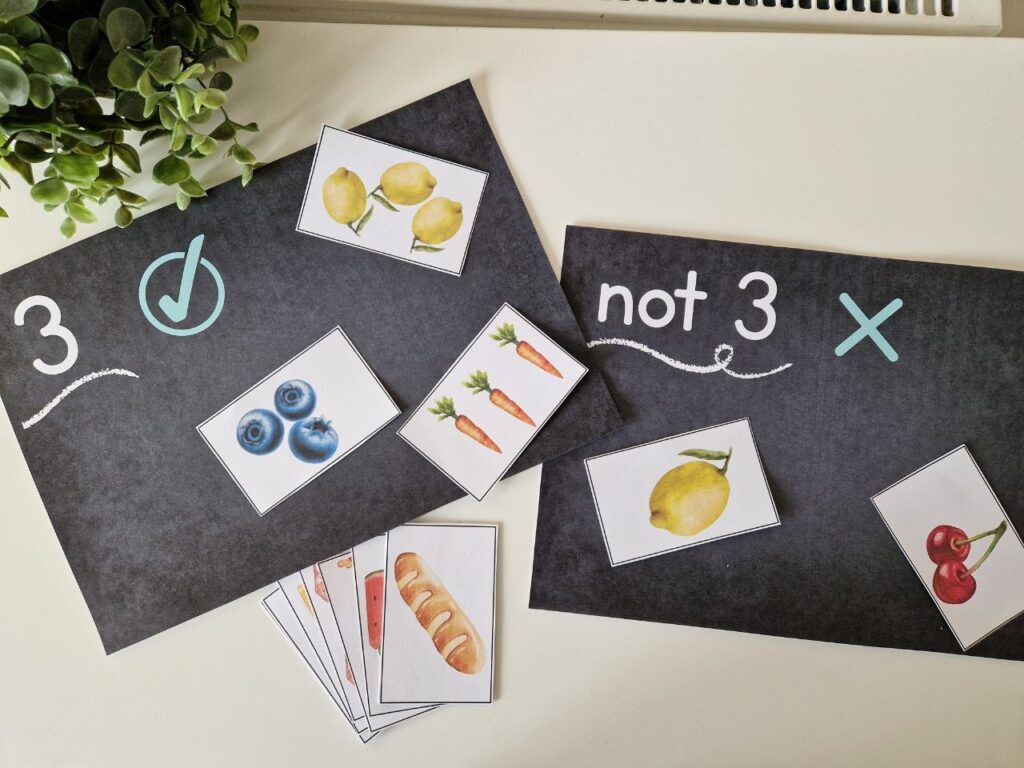
What to do: Set up a row of printed lemonade glasses, each labelled with a numeral. Children count out the correct number of white cubes (or faux ice cubes if you have them in your setting!) and add them to the ice tray ten frame. I’ve used a mixture of white cubes and acrylic ice cubes.
What it teaches: Counting accurately, understanding cardinality — the idea that the last number counted tells you the total — and early ten-frame thinking. It’s a deceptively simple activity that reveals a lot about where children are with one-to-one correspondence.
Top tip: Ask children “how do you know you have the right number?” This encourages them to check their answers and explain their reasoning.
2. 3 or Not 3 — Sorting and Subitising Activity
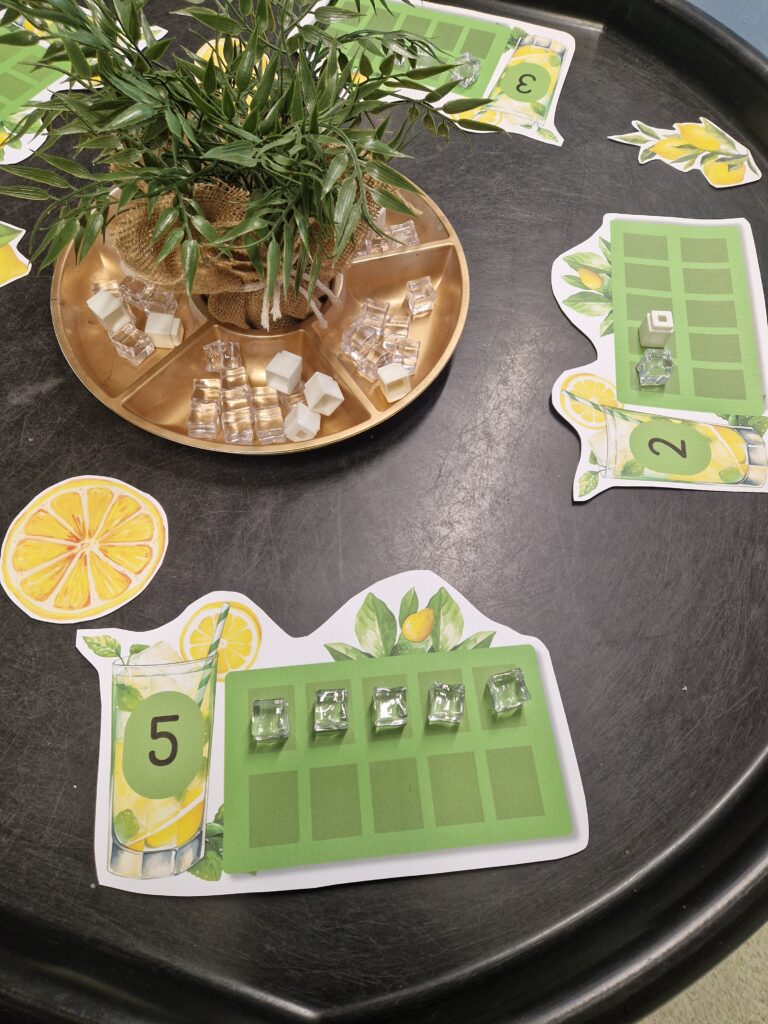
What to do: Print and laminate the sorting mat and food item cards. Children sort groups of food items into two categories — “3” or “not 3.” Once confident, switch it up: try “4 or not 4” or “5 or not 5 when they are ready.
What it teaches: Comparison of quantities, early classification skills, and recognising numerals to 5. The binary sorting format — is it this number or isn’t it? — is brilliant for developing flexible thinking about number.
Top tip: This activity works especially well as a partner task. Children love explaining their reasoning to each other.
3. How Many Insects?
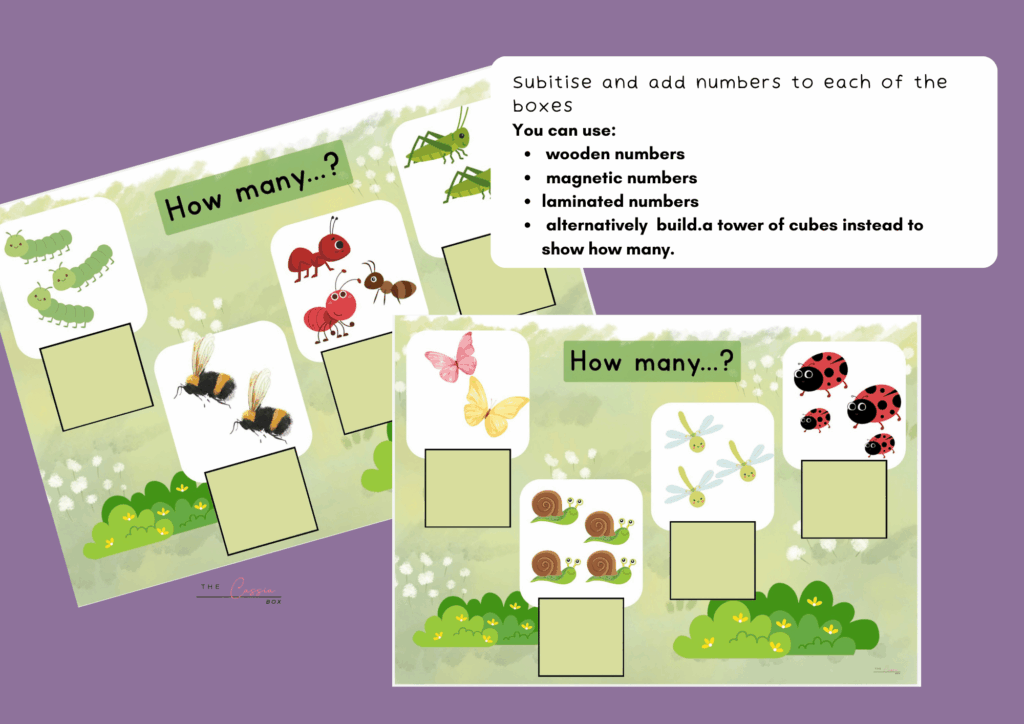
What to do: Print the sheets and either laminate them or slot into a plastic wallet. Children look at a collection of insects and either write the number or match it to the correct printed numeral card placed alongside. Enhance with the large number posters with a range of number representations.
What it teaches: Subitising, linking numerals to quantities, and early number composition. The plastic wallet version means children can write on with a dry-wipe marker and wipe clean — making it endlessly reusable.
Top tip: Encourage children to try to recognise the amount without counting each insect individually. “Can you just look and know?” is a great prompt for building subitising confidence.
4. Finger Counting — Numbers 1–5
What to do: Print the finger number sheets. Children look at the fingers shown and place the correct numeral card next to each one. There are two options — Velcro number cards for a tactile version, or a simple match and place.
What it teaches: Subitising, number recognition, and representing quantities in different ways. Finger patterns are one of the most powerful early number tools because children always have them available right, literally on their hands.
Top tip: Ask children to show you the same number on their own fingers after matching. Connecting the printed image to their own body deepens the understanding significantly.
5. Park the Cars
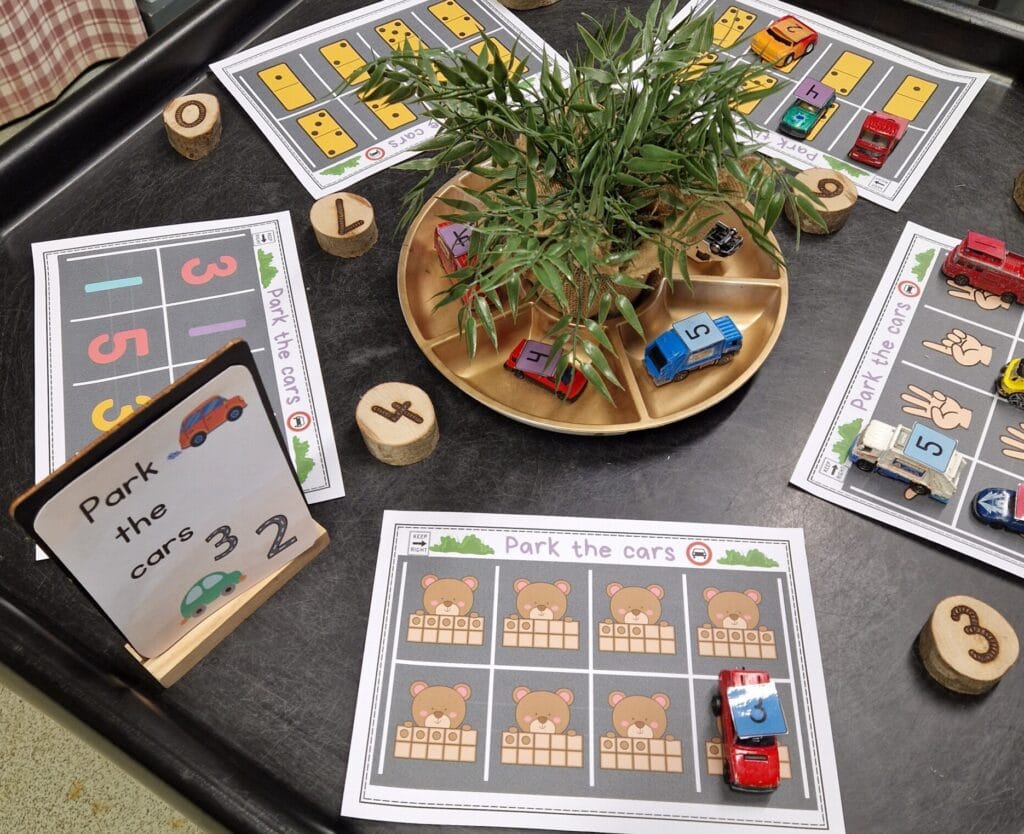
What to do: Set out the printed parking mats (different mat options to use or all) alongside a basket of toy cars labelled with numbers. Each space shows a numeral, domino, ten frame and a finger number representation. Children match the correct car (labelled with a number) to the right parking space.
What it teaches: Number recognition, subitising, and matching numerals to quantities through play, early number composition. This is one of those activities where children genuinely don’t realise they’re doing maths, they think they’re just parking cars.
Like what you see?👇
Click below to snag my EYFS Provision Starter Kit
EYFS STARTER KIT
6 fantastic activities!
Perfect for number recognition, early writing, malleable area and more. Print, laminate, set it all up – DONE!
6. Roll and Colour
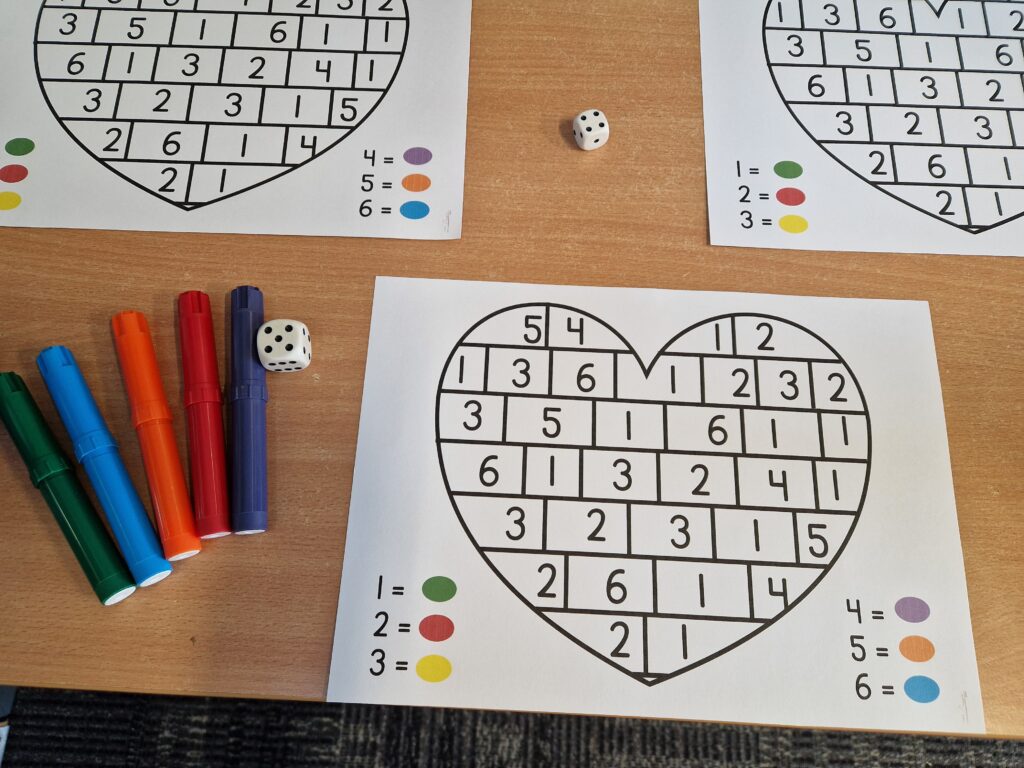
What to do: Children roll a standard dot dice, subitise the dots, then colour the matching numeral on their sheet based on the key. Simple, independent and endlessly engaging.
What it teaches: Matching numerals to quantities, subitising dot patterns and fine motor skills through colouring. It’s also a lovely low-stakes way to assess which numbers children recognise instantly and which ones they still need to count.
Top tip: Have two dice available — one dot dice and one numeral dice — so children can choose their level of challenge.
7. Number Match — Dice Game
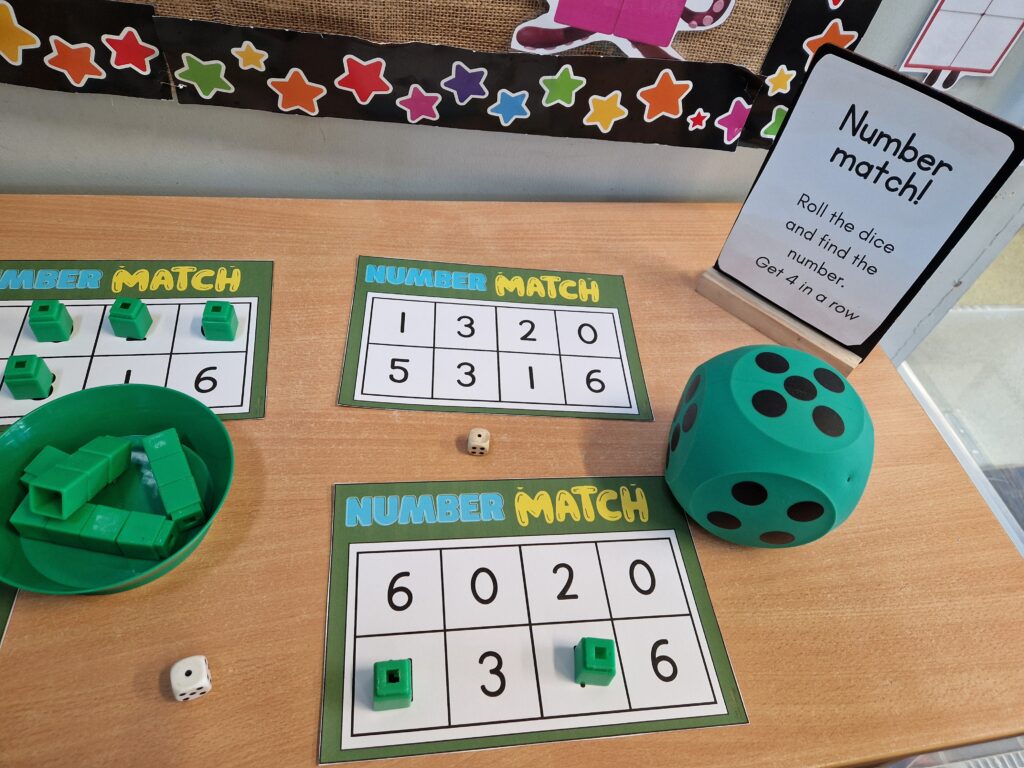
What to do: Children roll a dot dice, subitise the dots, find the matching numeral on their grid and cover it with a cube. First to cover four in a row wins — or play the longer version where the aim is to cover all squares.
What it teaches: Subitising, numeral recognition and turn-taking. The game format means children are highly motivated to keep going, which means more repetitions of the skill without it ever feeling like drill.
Top tip: This works brilliantly as a two-player game and is a great one for a TA to facilitate during the first few weeks while children are learning the routine.
8. Flower Activity — Add the Leaves
What to do: Create flower stems using chunky paintbrushes taped to the card base, each labelled with a numeral. Children count out the correct number of leaves or pegs and add them to the stem. Alternatively, print the whole sheet and have children stack green cubes on each flower to match the number shown.
What it teaches: Counting accurately, linking numeral to quantity, and early addition and subtraction reasoning. The peg version also builds fine motor strength — a bonus at this stage of the year.
Top tip: The peg version is brilliant for children who need more fine motor practise. The cube stacking version works well as a quieter, more independent activity or if you are short of time! Let’s be real.
Supplies Needed to Print:
Finally, here are a few ideas for the supplies you will need for printing and displaying your resource.
✔ Paper or cardstock (Cardstock is better if you don’t laminate.)
✔ Printer (This printer is almost the same as the one I have at home)
✔ Laminating sheets (Optional—helps them last longer!)
Ready for the whole half term?
All 8 of these activities PLUS 8 MORE are included in the Autumn 1 EYFS Maths Bundle along with a complete week-by-week planning and provision guide with assessment prompts, key vocabulary and challenge extensions, all mapped to EYFS principles.
It's everything you need to set up a rich, purposeful maths provision area for the first half term BUT without the Sunday evening panic.
✅ Print, laminate, set up in minutes
✅ Works alongside real classroom objects
✅ Full planning guide included — assessment prompts, key vocabulary, challenge extensions
GRAB the full Autumn 1 Maths Bundle👇
TAKE ME TO ITLife’s Better Together! Sign Up & Stay In the Loop.
Thank you!
You have successfully joined our subscriber list.
More That You'll Love...
Thanks for stopping by. Here are more resources to brighten your classroom and support your learners:
 Classroom Welcome Sign Freebie – Start the year strong with a warm and inviting sign that sets the tone from day one.
 Play Money Free Printable – Perfect for introducing money concepts in a fun and visual way—ideal for classroom shops or maths corners.