8 Maths Activities for Your Reception Classroom

During the Autumn 2  term my Reception learners are busy consolidating numbers to 5 and I am extending their learning with numbers up to 10 in my provision through my maths activities.   

In this post I’m sharing 8 of my favourite maths activities for Reception, all designed to sit in your continuous provision area and work independently alongside real classroom objects. They cover subitising, number recognition, counting, pattern, shape and early part-whole reasoning — and as always, they’re built around the print, laminate, set it up,  DONE principle.

All 8 activities are part of the Autumn 2 EYFS Maths Bundle –but first, grab your free EYFS Provision Starter Kit below and is completely FREE and try a sample of my work for yourself.

👉 Grab the free EYFS Provision Starter Kit here

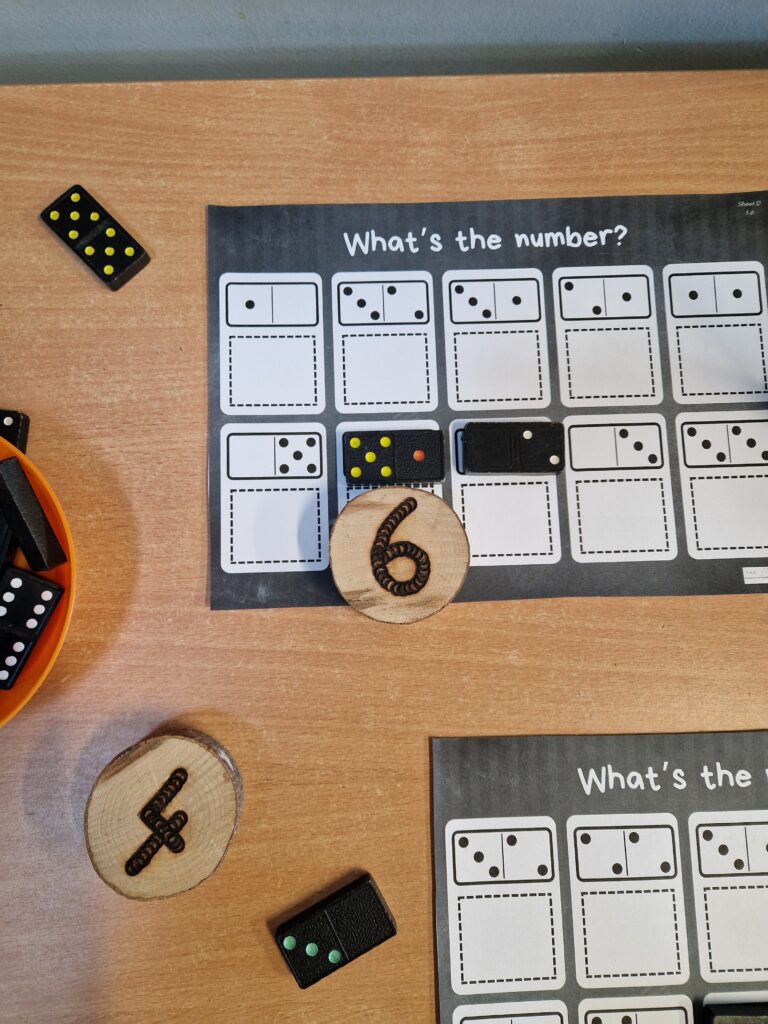
1. Domino Number Match

What to do: Set out the printed domino cards and collect domino tiles that match the ones on the card. Children look at each domino and add the correct numerals to match both sides — either writing them in or placing numeral cards alongside. Match the real domino to the picture too!


What it teaches: Number recognition and early addition. The domino format is brilliant because it naturally presents two amounts side by side, which starts children thinking about combining quantities without it ever feeling like a maths lesson.


Top tip: Ask children “how many altogether?” after they’ve matched both sides. You’ll quickly see who is ready to start adding and who still needs to consolidate each number independently.

2. Roll and Cover!

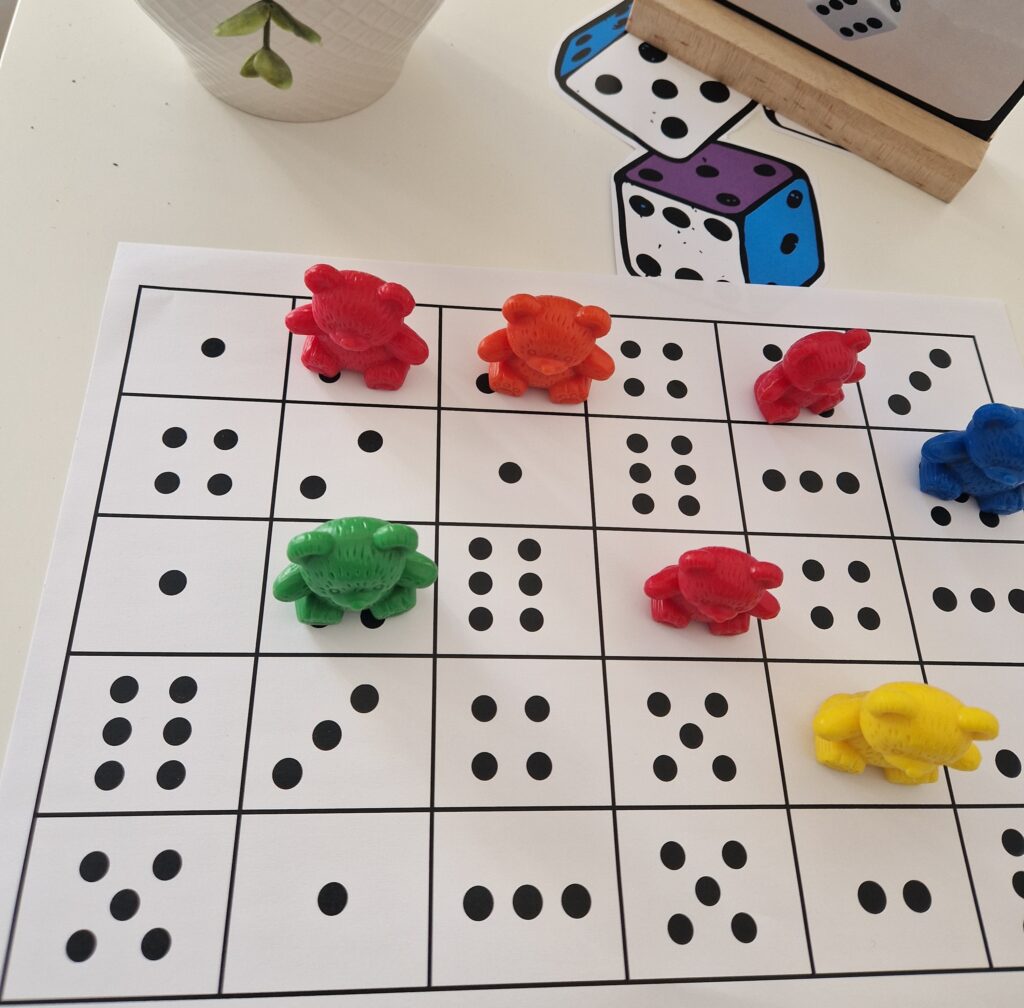
What to do: Children roll a numeral dice and cover the matching dot arrangement on the printed sheet. Simple, fast, and endlessly repeatable.


What it teaches: Matching numerals to quantities, subitising dot patterns and one-to-one correspondence. The rolling element keeps children engaged — there’s always the excitement of what number comes next.


Top tip: Swap to a dot dice for an extra challenge — children must subitise the dice AND the sheet, matching dot pattern to dot pattern rather than numeral to dots.

3. Subitise and Clip — Cookie Theme

What to do: Cookie-themed cards show dot arrangements up to 5. Children identify the amount shown and clip the correct numeral around the edge of the card.


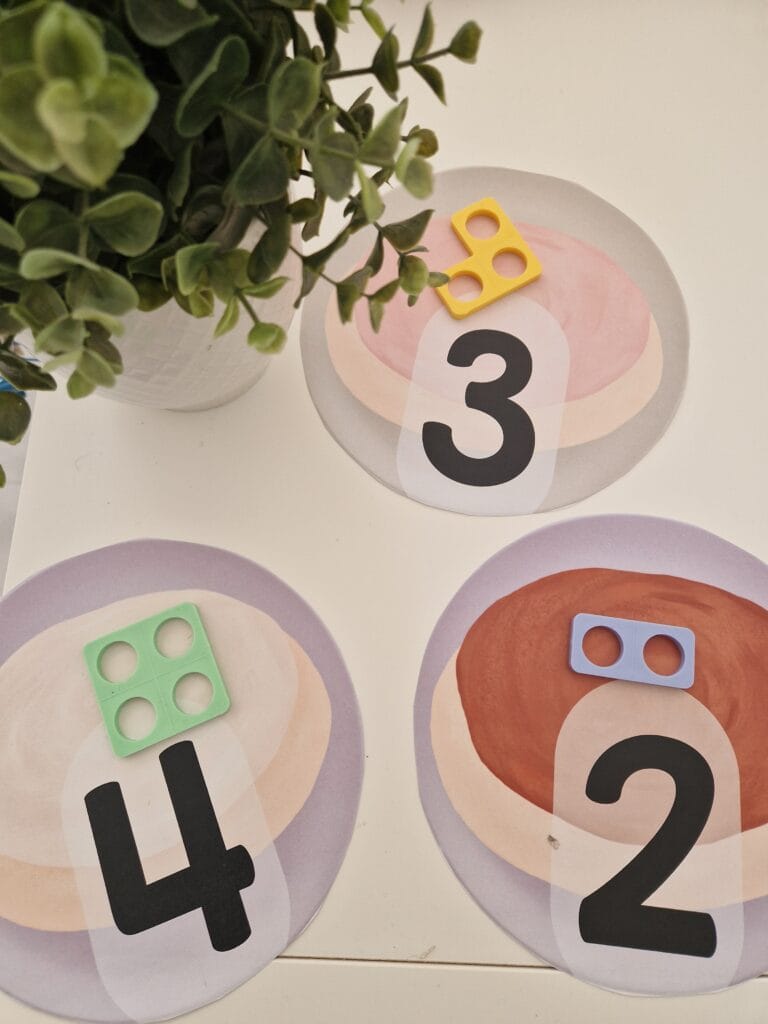
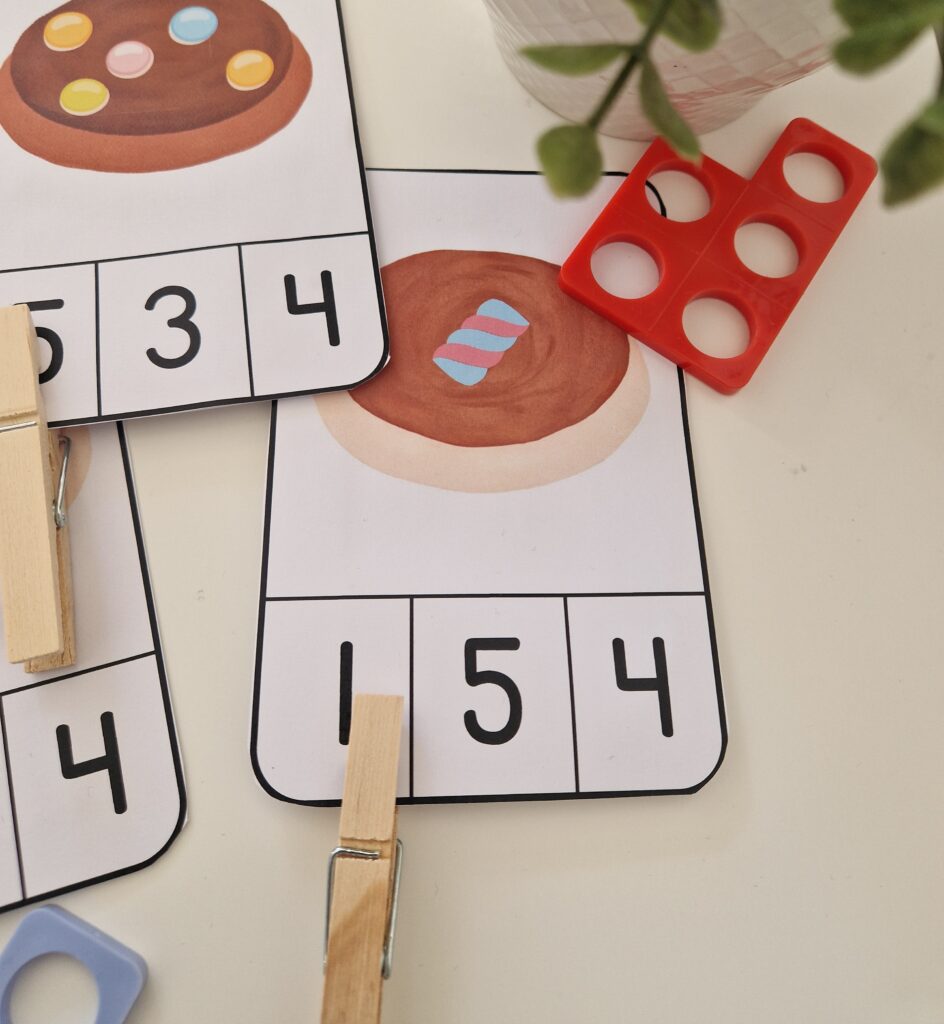
Option 2: Extend to 10 by having children decorate printed cookie cards with the correct number of loose parts, pom poms or stickers to match the numeral shown. Supports subitising, numeral recognition and fine motor skills.


What it teaches: Subitising, numeral recognition and fine motor development through clipping. The cookie theme makes this one irresistible to children — they genuinely want to sit down and do it.


Top tip: Watch carefully to see which children are truly subitising (instant recognition) and which are still counting each dot. Both are valid at this stage but the distinction tells you a lot about where they are.

Option 2 – as discussed above. Check out the picture below. You can decorate the cookies with cubes, gems or as shown in the photos numicon. It’s up to you.

4. Match the Wholes and Parts — Pumpkin Theme

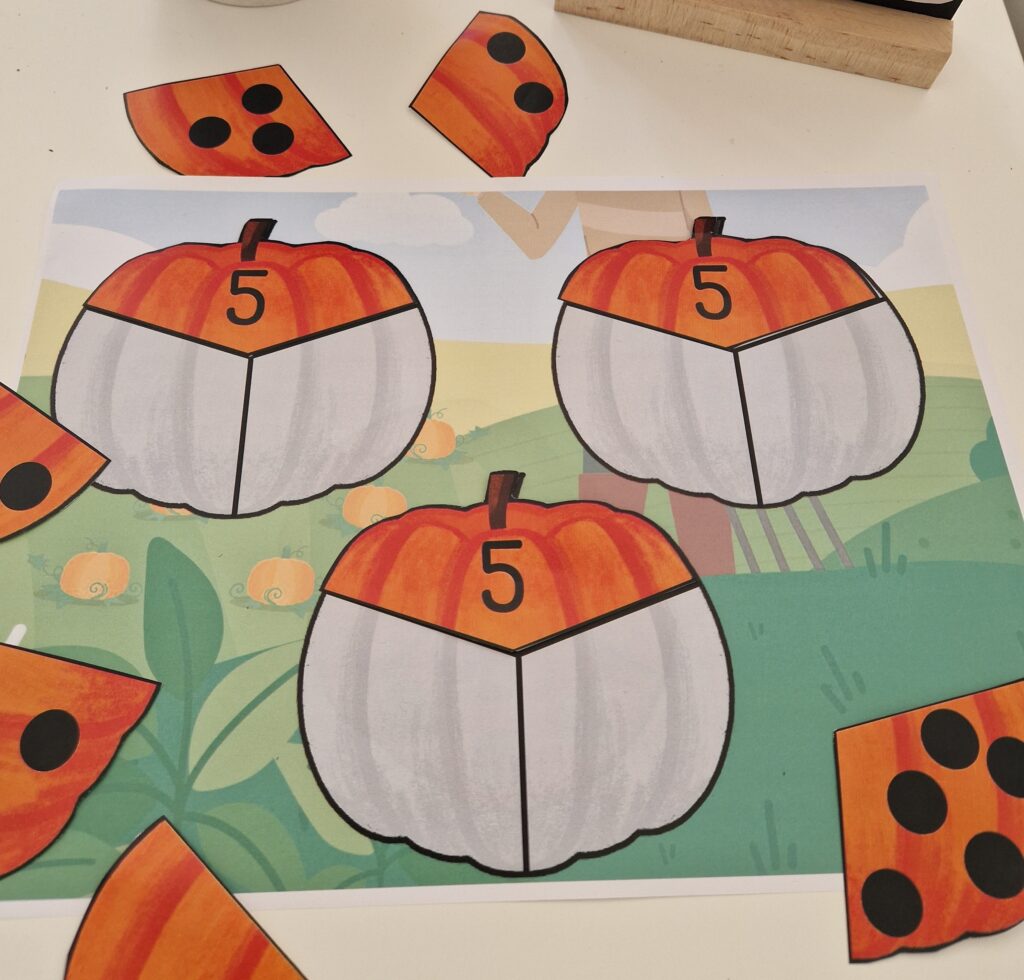
What to do: Print and laminate the grey pumpkin whole sheets and add Velcro to each section. Cut out the orange pumpkin pieces, add Velcro, and children match the parts back to make the whole. Available in two sizes,  print the one that suits your space.


What it teaches: Part-whole reasoning and early number composition. Understanding that a number can be split into parts ,  and that those parts always make the same whole, is one of the most important mathematical ideas in the Early Years, and this activity builds it beautifully through a tactile, seasonal context.


Top tip: Ask “how do you know those parts go together?” – the explanations children give reveal their understanding far better than any written task could.

5. Make the Shape

What to do: Children use playdough or loose parts to recreate the 2D shapes shown on the printed reference cards. A completely open-ended, creative approach to shape learning.


What it teaches: Shape recognition, properties of 2D shapes and spatial reasoning. When children physically construct a shape with playdough, they have to think about the number of sides, whether they’re straight or curved, and the overall structure — far more deeply than simply pointing at a shape on a poster.


Top tip: Encourage mathematical talk as they work: “How many sides does your shape have? Are they straight or curved? What’s it called?” The vocabulary builds naturally through doing.

Like what you see?👇

Click below to snag my FREE EYFS Provision Starter Kit 
EYFS STARTER KIT

6 fantastic activities!

Perfect for number recognition, early writing, malleable area and more.   Print, laminate, set it all up – DONE! 

This Starter Kit is ABSOLUTELY FREE!

6. Ring Ring!

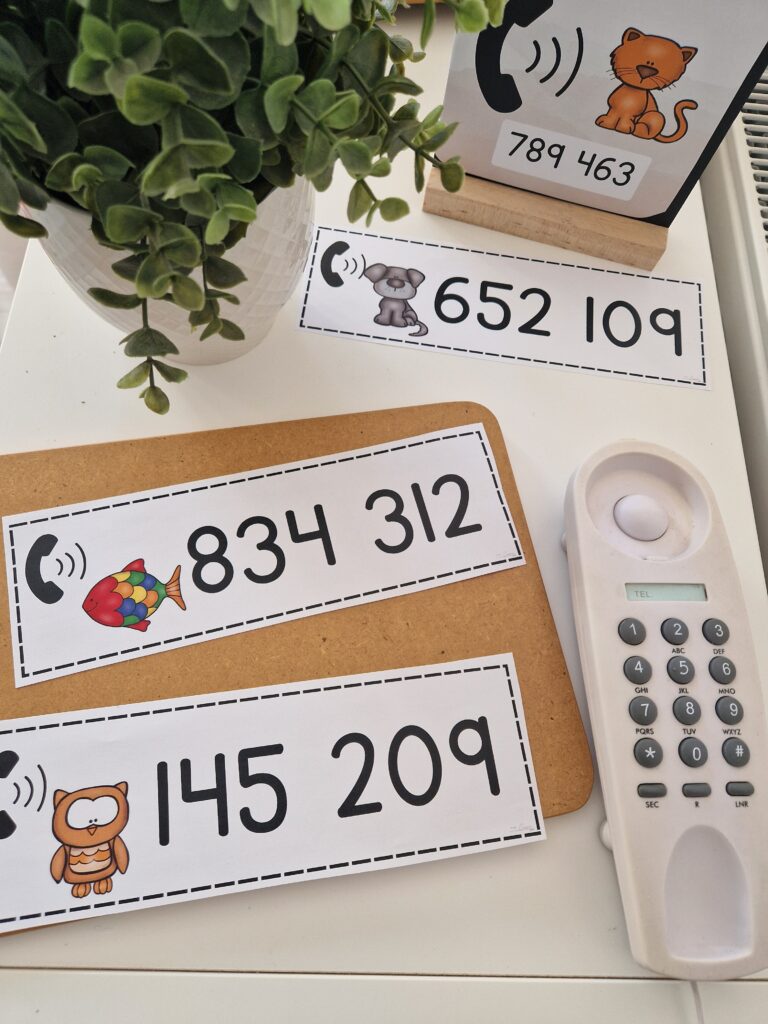
What to do: Set up toy telephones on your table or tuff tray. Print and laminate animal phone number cards and place them around the tray. Children practise number recognition and matching by finding and dialling the number shown on each animal’s card.


What it teaches: Numeral recognition, number matching and early understanding of multi-digit numbers — all wrapped up in imaginative play. This is one of those activities where children are so absorbed in the role play that they don’t realise how much maths they’re doing.


Top tip: The more telephones the better — this works brilliantly as a collaborative activity where children take turns being the caller and the receiver.

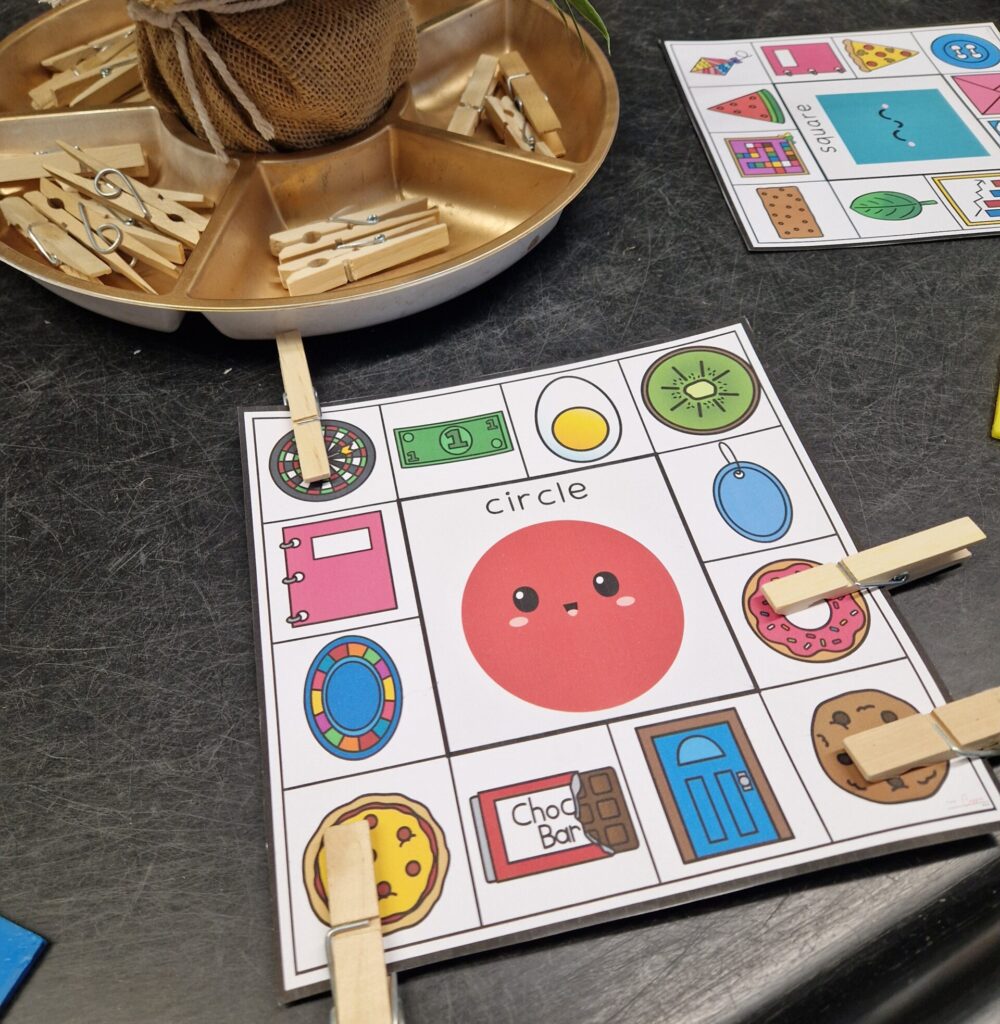
7. Find and Clip - Shapes

What to do: Each card shows real-life images of objects around a perimeter, with a target 2D shape in the centre. Children find and clip all the real-life examples that match the target shape.


What it teaches: Shape recognition in real-world contexts, classification and fine motor skills. Seeing shapes in real life, rather than as isolated diagrams, is crucial for building genuine mathematical understanding that children can apply beyond the classroom.


Top tip: After the activity, take children on a shape hunt around the classroom or outdoor area. “Can you find something that looks like your shape out there?” extends the learning beautifully.

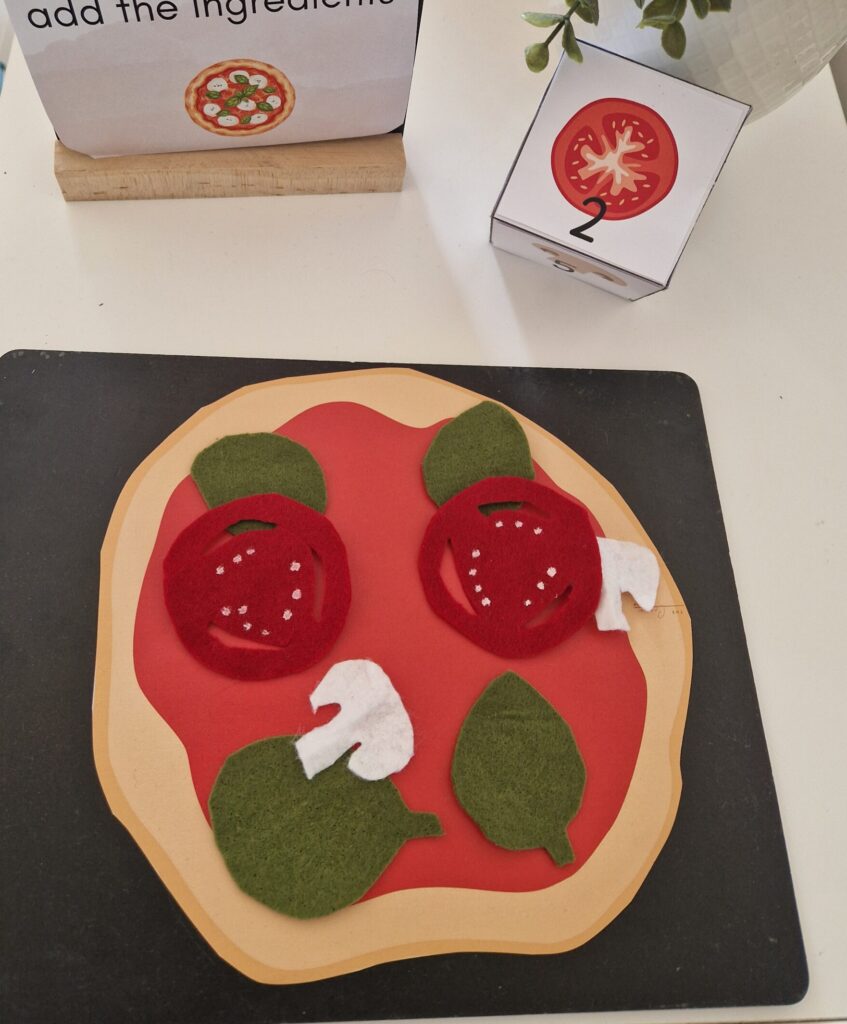
8. Make the Pizza!

What to do: Children roll a dice and add the correct number of toppings to their printed pizza base using topping cards. For a more tactile version, use felt cut-outs with drawn-on details instead of printed cards.

What it teaches: Counting accurately, one-to-one correspondence and cardinality — the understanding that the last number counted tells you the total. The pizza format makes this one of the most talked-about activities on the table — children love adding their toppings and showing each other their creations.

Top tip: Introduce two dice for an extension challenge — children roll both, add the totals and load up a super pizza. A brilliant introduction to early addition in a completely playful context.

Supplies Needed to Print:

Finally, here are a few ideas for the supplies you will need for printing and displaying your resource. 


✔ Paper or cardstock (Cardstock is better if you don’t laminate.)

✔ Printer  (This printer is almost the same as the one I have at home)

✔ Laminating sheets (Optional—helps them last longer!)

Ready for the whole half term?

All 8 of these activities PLUS 10 MORE are included in the Autumn 2 EYFS Maths Bundle along with a complete week-by-week planning and provision guide with assessment prompts, key vocabulary and challenge extensions, all mapped to EYFS principles.

It's everything you need to set up a rich, purposeful maths provision area for the first half term BUT without the Sunday evening panic.

✅ Print, laminate, set up in minutes

✅ Works alongside real classroom objects

✅ Full planning guide included — assessment prompts, key vocabulary, challenge extensions

GRAB the full Autumn 2 Maths Bundle👇

TAKE ME TO IT

Life’s Better Together! Sign Up & Stay In the Loop.

More That You'll Love...

Thanks for stopping by. Here are more resources to brighten your classroom and support your learners:

Scroll to Top